News

Turning Limitations into Opportunities: HSE Round Table Explores Employment for Students with Disabilities

Turning Limitations into Opportunities: HSE Round Table Explores Employment for Students with Disabilities
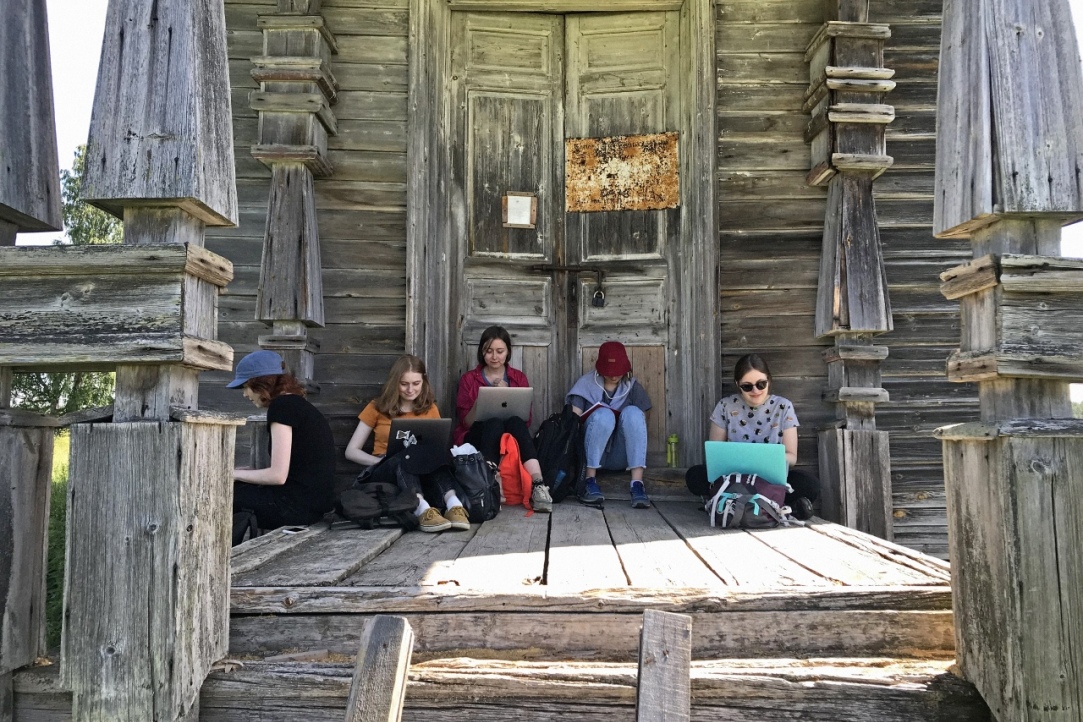
Around 11 million people in Russia live with a disability. Of these, approximately 27% are of working age, yet only one in four is employed. HSE University and the Bank of Russia jointly organised a round table titled ‘Employment Practices for Students with Disabilities and Health Limitations.’

Russian Scientists Assess Dangers of Internal Waves During Underwater Volcanic Eruptions

Russian Scientists Assess Dangers of Internal Waves During Underwater Volcanic Eruptions
Mathematicians at HSE University in Nizhny Novgorod and the A.V. Gaponov-Grekhov Institute of Applied Physics of the Russian Academy of Sciences studied internal waves generated in the ocean after the explosive eruption of an underwater volcano. The researchers calculated how the waves vary depending on ocean depth and the radius of the explosion source. It turns out that the strongest wave in the first group does not arrive immediately, but after a significant delay. This data can help predict the consequences of eruptions and enable advance preparation for potential threats. The article has been published in Natural Hazards. The research was carried out with support from the Russian Science Foundation (link in Russian).

'Friendship of Ganga and Volga': Rector of University of Delhi Delivers a Lecture for Students of HSE University-St Petersburg

'Friendship of Ganga and Volga': Rector of University of Delhi Delivers a Lecture for Students of HSE University-St Petersburg
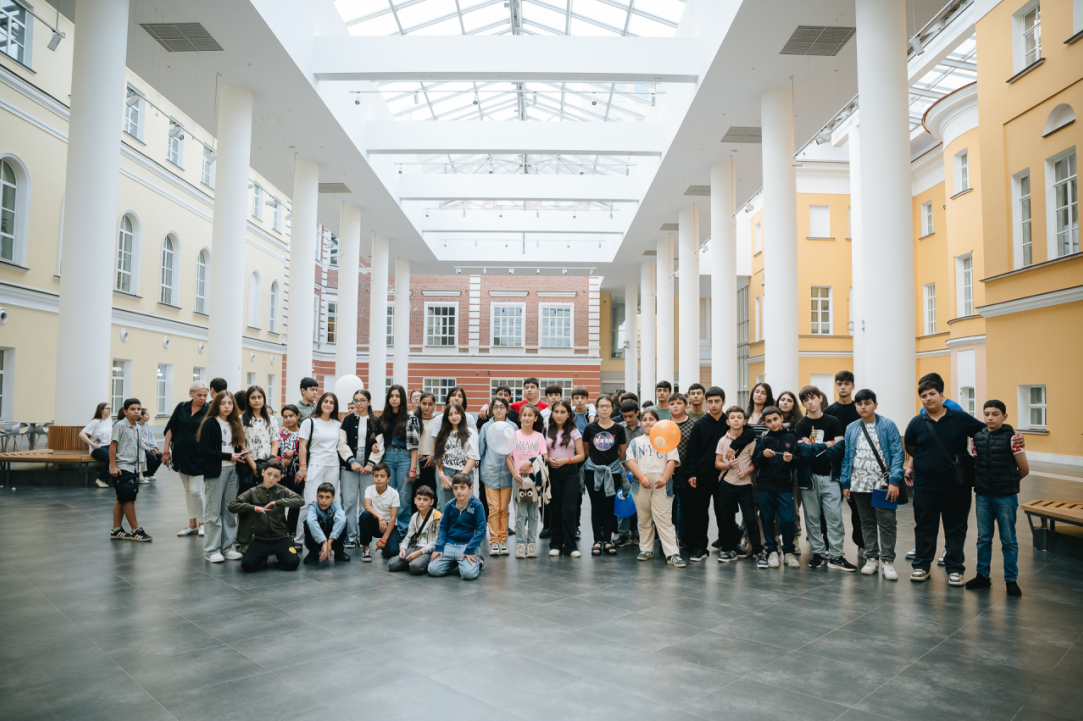
The honoured guest of the HSE St Petersburg International Week was Yogesh Singh, rector of the University of Delhi. He held a discussion with employees of two international mirror laboratories and also delivered an open lecture for students and professors of HSE University 'India-Russia: Friendship of Ganga and Volga'.

'Partnership in the Language of Design': HSE University-St Petersburg Opens Russian-Indonesian Exhibition of Film Posters

'Partnership in the Language of Design': HSE University-St Petersburg Opens Russian-Indonesian Exhibition of Film Posters
At the Rope Shop building, the International Partners' Week featured the opening ceremony of the student exhibition of the international posters contest winners and finalists organised by the HSE University-St Petersburg School of Art and Design together with the Institut Teknologi Sepuluh Nopember (Indonesia). Designers and illustrators from two countries created alternative posters for Russian and Indonesian films.

HSE University-St Petersburg Holds Arab Culture Day

HSE University-St Petersburg Holds Arab Culture Day
The building of HSE University-St Petersburg on Kantemirovskaya Street hosted a festival devoted to the culture of Arab countries. The event featured presentations of traditions, national dances, and dishes by students from Iraq, Algeria, Chad, Jordan, Morocco, Lebanon, Egypt, Palestine, Yemen and the United Arab Emirates.

‘Feel the Atmosphere of Different Cultures’: HSE University Holds Oriental Crazy Day

‘Feel the Atmosphere of Different Cultures’: HSE University Holds Oriental Crazy Day
On May 17, the eleventh Oriental Crazy Day, organised by the Faculty of World Economy and International Affairs, took place at the HSE Cultural Centre. Anyone interested in Asian Studies, culture and languages, as well as admission to HSE University could take part in the event. Students and teachers of the university prepared master classes, quizzes and contests, K-pop dancing and kabuki theatre, Asian songs and poetry for all the participants.

'The Branch of Medicine That Our Developments Primarily Target Is Cardiology'

'The Branch of Medicine That Our Developments Primarily Target Is Cardiology'
The application of mathematical models to the diagnosis and treatment of cardiovascular diseases contributes to the effective detection of patient predispositions and supports the selection of best treatment strategies. The use of mathematical models helps create new diagnostic tools and train neural networks to assist clinicians. Researchers from HSE University and colleagues from Saratov State Medical University are engaged in this work as part of the Mirror Laboratories project. In this interview, Natalya Stankevich, Senior Research Fellow at the International Laboratory of Dynamical Systems and Applications of the HSE Campus in Nizhny Novgorod, talks about what the collaboration has achieved so far.

The First Lady of Brazil Visits HSE University

The First Lady of Brazil Visits HSE University
On May 7, 2025, Janja Lula da Silva — First Lady of Brazil and a prominent advocate for sustainable development who initiated the Global Alliance Against Hunger and Poverty — visited HSE University. She held a private meeting with HSE University Rector Nikita Anisimov, where they explored promising avenues for strengthening Russia-Brazil collaboration in science and education.

HSE University–St Petersburg Presents Project on Social Entrepreneurship at Session of Russian–Malaysian Working Group

HSE University–St Petersburg Presents Project on Social Entrepreneurship at Session of Russian–Malaysian Working Group
Alexander Sorokin, Dean of the St Petersburg School of Social Sciences, presented the results of a joint Russian–Malaysian mirror laboratory project in social entrepreneurship at the second meeting of the Russian–Malaysian Working Group on Education, Science, and Technology at the Universiti Teknologi Malaysia (UTM).

Genetic Prediction of Cancer Recurrence: Scientists Verify Reliability of Computer Models

Genetic Prediction of Cancer Recurrence: Scientists Verify Reliability of Computer Models
In biomedical research, machine learning algorithms are often used to analyse data—for instance, to predict cancer recurrence. However, it is not always clear whether these algorithms are detecting meaningful patterns or merely fitting random noise in the data. Scientists from HSE University, IBCh RAS, and Moscow State University have developed a test that makes it possible to determine this distinction. It could become an important tool for verifying the reliability of algorithms in medicine and biology. The study has been published on arXiv.