HSE Development Programme until 2030

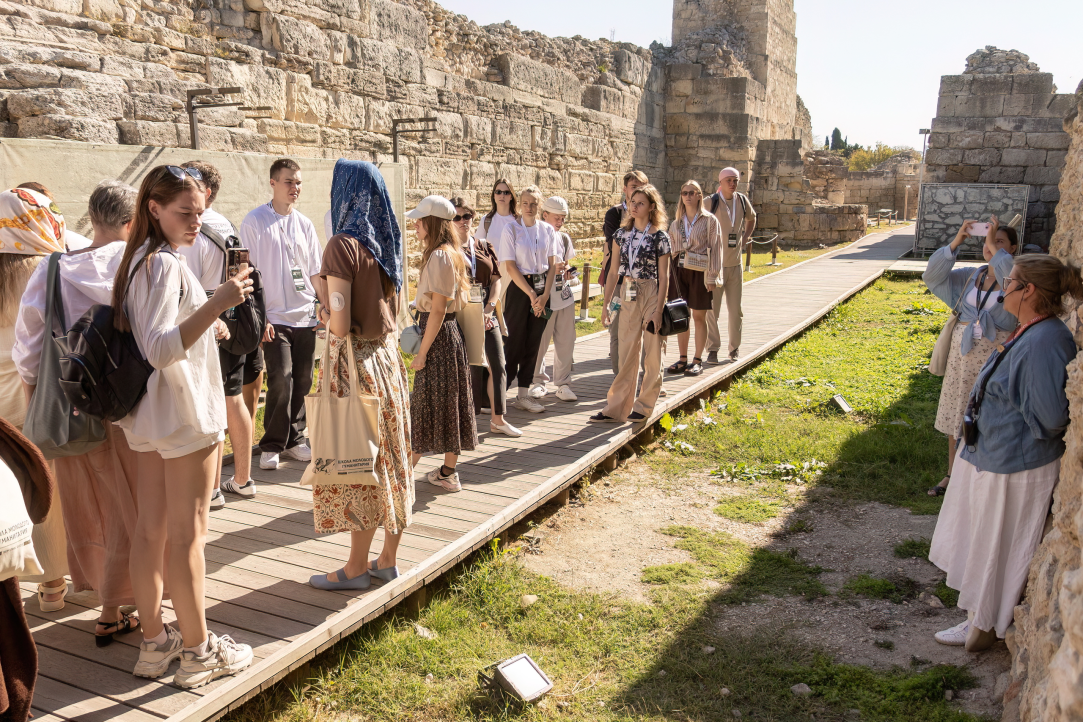
First Caucasus School on Experimental Research and Cognitive Sciences Takes Places in Adygea

Susanna Makerova, Olga Dragoy, Mira Bergelson
On September 17–20, 2025, the First Caucasus School on Experimental Research and Cognitive Sciences took place at the Gornaya Legenda venue of Adyghe State University (ASU). The event was organised by the ASU Experimental Linguistics Laboratory, the HSE Centre for Language and Brain, and the HSE Centre for Sociocultural and Ethnolinguistic Studies. The school brought together over 50 participants—students, doctoral candidates, and early-career researchers from across Russia, along with lecturers and speakers from France, Serbia, China, Turkey, Kazakhstan, and Uzbekistan.

HSE Scientists Reveal How Disrupted Brain Connectivity Affects Cognitive and Social Behaviour in Children with Autism

HSE Scientists Reveal How Disrupted Brain Connectivity Affects Cognitive and Social Behaviour in Children with Autism
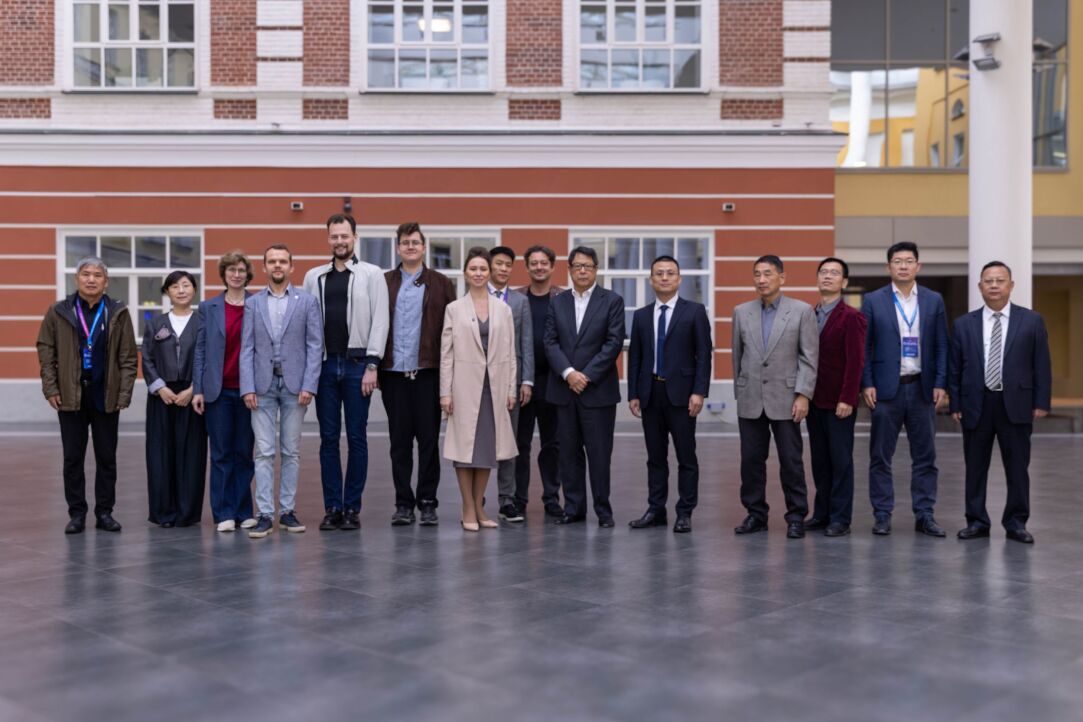
An international team of scientists, including researchers from the HSE Centre for Language and Brain, has for the first time studied the connectivity between the brain's sensorimotor and cognitive control networks in children with autism. Using fMRI data, the researchers found that connections within the cognitive control network (responsible for attention and inhibitory control) are weakened, while connections between this network and the sensorimotor network (responsible for movement and sensory processing) are, by contrast, excessively strong. These features manifest as difficulties in social interaction and behavioural regulation in children. The study has been published in Brain Imaging and Behavior.

Scientists Develop New Method to Detect Motor Disorders Using 3D Objects

Scientists Develop New Method to Detect Motor Disorders Using 3D Objects
Researchers at HSE University have developed a new methodological approach to studying motor planning and execution. By using 3D-printed objects and an infrared tracking system, they demonstrated that the brain initiates the planning process even before movement begins. This approach may eventually aid in the assessment and treatment of patients with neurodegenerative diseases such as Parkinson’s. The paper has been published in Frontiers in Human Neuroscience.

'Biotech Is Booming Worldwide'

'Biotech Is Booming Worldwide'
For more than five years, the International Laboratory of Bioinformatics at the HSE Faculty of Computer Science has been advancing cutting-edge research. During this time, its scientists have achieved major breakthroughs, including the development of CARDIOLIFE—a unique genetic test unmatched worldwide that predicts the likelihood of cardiovascular disease. With the active participation of HSE students, including doctoral students, the team is also working on a new generation of medicines. In this interview with the HSE News Service, Laboratory Head Maria Poptsova shares insights into their work.

Updated Facts and Figures and Dashboards Now Available on HSE Website

Updated Facts and Figures and Dashboards Now Available on HSE Website
The HSE Office of Analytics and Data Management, together with the Visual Communications Unit, has developed a new Facts and Figures about HSE University page on the HSE website. In addition, all university staff now have access to a dashboard with the updated indicators of the Priority 2030 programme.

Immune System Error: How Antibodies in Multiple Sclerosis Mistake Their Targets

Immune System Error: How Antibodies in Multiple Sclerosis Mistake Their Targets
Researchers at HSE University and the Institute of Bioorganic Chemistry of the Russian Academy of Sciences (IBCh RAS) have studied how the immune system functions in multiple sclerosis (MS), a disease in which the body's own antibodies attack its nerve fibres. By comparing blood samples from MS patients and healthy individuals, scientists have discovered that the immune system in MS patients can mistake viral proteins for those of nerve cells. Several key proteins have also been identified that could serve as new biomarkers for the disease and aid in its diagnosis. The study has been published in  Frontiers in Immunology. The research was conducted with support from the Russian Science Foundation.

‘The Goal of Modern Geography Is To Digitise Expert Knowledge and Integrate It with Big Data’

‘The Goal of Modern Geography Is To Digitise Expert Knowledge and Integrate It with Big Data’
The importance of geographical science is increasing, as is the demand for education in this field. Since 2020, application numbers for Bachelor’s programmes at HSE University’s Faculty of Geography and Geoinformation Technology have climbed by 30%, while interest in Master’s programmes has also expanded, with applications up 10–15%. Nikolay Kurichev, Dean of the Faculty, spoke about this at a press conference hosted by MIA Rossiya Segodnya.

HSE Scientists Test New Method to Investigate Mechanisms of New Word Acquisition

HSE Scientists Test New Method to Investigate Mechanisms of New Word Acquisition
Researchers at the HSE Centre for Language and Brain were among the first to use transcranial alternating current stimulation to investigate whether it can influence the acquisition of new words. Although the authors of the experiment have not yet found a link between brain stimulation and word acquisition, they believe that adjusting the stimulation parameters may yield different results in the future. The study has been published in Language, Cognition and Neuroscience.

‘Student Ideas Shed Light on Key Challenges for Urban Development’

‘Student Ideas Shed Light on Key Challenges for Urban Development’
The first international joint summer school of the Vysokovsky Graduate School of Urbanism (GSU) at both the HSE Faculty of Urban and Regional Development and Brest State Pushkin University (BrSU), hosted by BrSU, has come to a close. The programme focused on studying buffer zones along the railway lines encircling the city centre. Participants included students from the GSU’s Urban Planning degree programme, as well as students from BrSU and Brest State Technical University.

HSE University and MTS Join Forces to Combat Deepfakes and Train AI to Create Bespoke Video Content

HSE University and MTS Join Forces to Combat Deepfakes and Train AI to Create Bespoke Video Content
HSE University and MTS Web Services (MWS) have announced the launch of a series of joint research initiatives in the field of artificial intelligence technologies. These efforts aim to develop innovative solutions in cybersecurity, multimodal content generation, and big data analysis. The project’s leading institution is the HSE Tikhonov Moscow Institute of Electronics and Mathematics (HSE MIEM), under the overall coordination of the HSE AI Research Centre.